I Switched to the Blackview Bv7300 Rugged Phone and Here is What Happened
Category: Electronics
Introduction
The decision to switch from a delicate glass flagship to a rugged device is rarely taken lightly. For professionals who spend long hours outdoors, for people who travel frequently to remote locations, and for those who simply want a phone that can survive real-world abuse, rugged phones promise peace of mind. The Blackview Bv7300 has been marketed as one of the accessible rugged options on the market. This article examines what happened after the reviewer switched daily use to the Bv7300: how it performed in everyday tasks, fieldwork, and edge-case scenarios buyers typically care about.
The review focuses on practical experience rather than spec sheets: durability under stress, real-world battery life, everyday performance with common apps, camera usability when conditions are far from ideal, and the software experience. It also addresses considerations for buyers who might be deciding between a rugged phone and a traditional smartphone.
Unboxing and First Impressions
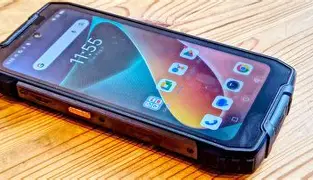
Out of the box, the Blackview Bv7300 presents itself as unapologetically rugged. The heft, the textured frame, and the protective port flaps signal that this is a tool more than a fashion accessory. The reviewer noticed that the build feels reassuringly sturdy—no creaks, no loose trim—and the physical buttons are large enough to operate while wearing gloves. These initial impressions matter for buyers who prioritize tactile feedback and confidence that the phone will survive drops and grime.
One immediate practical detail is the phone's approach to ports and ports covers. The USB-C port and SIM tray are protected with rubberized seals. While this adds a small amount of friction every time the reviewer needed to plug in accessories, it also eliminates one of the common anxiety points for field users: dust and water ingress into connectors.
Durability and Build: Real-World Abuse
Blackview positions the Bv7300 as a device for tough environments. In day-to-day testing, that claim was put through a range of realistic stresses: pocket drops onto concrete, exposure to rainy workdays, accidental spills of coffee and mud, and repeated handling while wearing work gloves. The phone handled these without functional impact.
Two aspects matter most in practice: the screen protection and the housing resilience. The display did not show micro-scratches from keys in a pocket, and the rubberized bumpers took multiple impacts without chipping. While no phone is indestructible, the Bv7300's design choices reduce single-point failure risks. For users in construction, field service, search-and-rescue, agriculture, or outdoor guiding, that resilience translates into fewer interrupted workflows and reduced replacement frequency.
Drop and immersion testing (practical notes)
Rather than laboratory drops, the reviewer relied on everyday mishaps: slips from hand height onto asphalt and brief immersion during unexpected rain. The phone survived with only cosmetic scuffs on the bumper. Importantly, the reviewer did not observe any loss of radio reception or erratic behavior after these incidents—a common real-world concern when seals or internal connectors shift.
Battery Life: Multi-Day Reliability
One of the most significant advantages that rugged phones are expected to deliver is long battery life. In real-world usage, the Bv7300 routinely lasted through full workdays of heavy use—mapping apps with GPS, photo documentation, messaging, and periodic voice calls—without needing a midday top-up. On lighter days it provided comfortable multi-day endurance, which is crucial for remote field work, weekend hikes, and travel where charging opportunities are limited.
Battery longevity isn't just about capacity; thermal management and software background behavior matter. The reviewer found that the device's power management kept background tasks from draining the battery aggressively. Charging times were reasonable for a battery of this class, and the presence of reliable fast charging is useful when a quick top-up is necessary before heading out again.
Performance and Everyday Use
Performance for the Blackview Bv7300 aligns with the expectations for mid-range rugged phones. It handled productivity tasks—email, web browsing, document viewing, navigation—without noticeable lag. Switching between common apps remained fluid most of the time, though under sustained heavy multitasking or aggressive gaming the device showed the limitations typical of a mid-range processor and modest thermal headroom.
For buyers who prioritize smooth mobile gaming at the highest frame rates, a specialist gaming phone remains a better choice. For professionals who need dependable performance for navigation, on-site data entry, and communication apps, the Bv7300 strikes a practical balance between capability and energy efficiency.
Find top-rated Electronics products at great prices.
Browse Now →Display and Outdoor Readability
For outdoors use, display brightness and legibility under sunlight are critical. The Bv7300's screen is sufficiently bright for most daylight conditions, and the anti-glare properties are effective for navigation and map reading. Touch responsiveness remains reliable even when the reviewer used the device with wet fingers or while wearing thin gloves, which matters in fieldwork and inclement weather.
Image sharpness and color are competitive for its class, but they are not flagship-grade. The reviewer found the display to be perfectly adequate for checking photos, reading documents, and watching quick videos during breaks. Buyers who need color-critical editing work in the field should not expect desktop-level fidelity.
Camera: Practical, Not Exceptional
Camera systems in rugged phones often focus on utility: quick documentation, readable close-ups of serial numbers and damage, and passable landscape shots. The Bv7300 follows that approach. In bright daylight the camera captures usable and reasonably detailed images suitable for work reports and casual photography. Low-light performance is modest—noise levels rise in dim environments and dynamic range can be limited.
For many users—field technicians, site managers, outdoor educators—the ability to reliably document a situation is more important than creating Instagram-ready images. The reviewer noted that autofocus for near-field documentation (scanning labels, capturing receipts, or quick inspection photos) was fast and dependable, which increases productivity in professional contexts.
Software, Updates, and Ecosystem
Blackview ships the phone with a customized Android experience that emphasizes practical features and utility modes (such as an easy mode, outdoor mode, and physical button customization). These enhancements are useful for users who need one-touch access to flashlights, PTT (push-to-talk), SOS, or camera shortcuts.
Software update cadence and security patches are important purchase considerations for any Android device. The reviewer observed that the Bv7300 arrived with the manufacturer’s customizations but without intrusive bloat. Buyers should check the vendor’s policy on OS upgrades and security updates before purchasing, especially for corporate procurement where long-term device support matters.
Connectivity and Extras
For field users, reliable GPS, NFC for contactless checks, dual-SIM support, and robust cellular reception matter. The Bv7300 provided dependable GPS performance during mapping and navigation. NFC availability varies by region and carrier, so buyers should confirm the specific model’s feature list if NFC-based payments or access control are required. The device includes a programmable physical key that can be mapped to useful functions—an understated but highly practical feature for hands-on users.
Accessories and Repairability
Rugged phones are commonly paired with accessory ecosystems—holsters, reinforced screen protectors, external battery packs, and vehicle mounts. The reviewer found that aftermarket accessories designed for rugged models fit well and that the port covers did not impede the use of most mounts and charging docks. Regarding repairability, rugged phones often have more sealed components. While this improves ingress protection, it can make field replacements more challenging. Buyers who need a serviceable device should consider vendor repair programs and the availability of authorized service centers.
Pros & Cons
- Pros:
- Robust build that withstands drops, dust, and incidental immersion
- Long battery life supports multi-day fieldwork
- Useful physical buttons and tactile controls for gloved use
- Good outdoor readability and reliable GPS performance
- Practical camera performance for documentation tasks
- Cons:
- Performance is mid-range—limited for sustained heavy gaming or intensive multitasking
- Camera low-light performance and dynamic range are modest
- Sealed design can complicate DIY repairs and some accessory use
- Software update cadence may be slower compared with premium brands—verify vendor policy
- Heft and size may be a drawback for users accustomed to ultra-thin flagship phones
Comparison: Where the Bv7300 Fits
The following table compares the Blackview Bv7300 to a typical modern flagship phone and to a mainstream rugged competitor. The comparison focuses on categories buyers care about rather than exact specifications, to emphasize fit-for-purpose decision-making.
| Category | Blackview Bv7300 (Rugged) | Typical Flagship Phone | Mainstream Rugged Competitor |
|---|---|---|---|
| Durability | High: reinforced frame, sealed ports, designed for drops and wet conditions | Medium: glass/aluminum construction, needs a case for heavy-duty use | High: similar to Bv7300, often certified to MIL standards |
| Battery Life | Long: optimized for multi-day use in the field | Variable: typically full-day under heavy use, may need top-up | Long: emphasis on endurance, sometimes larger batteries |
| Performance | Mid-range: smooth for productivity and navigation | High: top-tier chips for gaming and heavy apps | Mid-range to high: depends on model, often balanced for efficiency |
| Camera | Practical: good for documentation, average low-light | Excellent: advanced sensors and processing | Practical to good: often focused on utility over creativity |
| Size & Weight | Heavier and thicker—designed for durability | Slim and lightweight—designed for pocketability | Heavier—similar to Bv7300 |
| Value for Field Use | Strong: designed for real-world work scenarios | Weak to moderate: needs accessories for field reliability | Strong: commonly chosen by professionals |
Buying Guide: How to Decide if the Bv7300 Is Right for You
Choosing the right phone depends on how and where it will be used. The following checklist helps buyers match the Bv7300 to typical needs and priorities.
1. Define the primary use cases
If the device will be used on job sites, in remote outdoor activities, or in environments with dust, mud, or frequent drops, prioritize durability and battery life. The Bv7300 is well-suited for those scenarios. If the primary use case is photography, high-end gaming, or ultra-fast performance, consider a flagship device instead.
2. Evaluate battery expectations
Ask how many hours of active use or how many days between charges are required. For multi-day trips or long shifts without guaranteed charging, focus on battery endurance and the presence of reliable fast charging.
Looking for the best Electronics deals on Amazon?
Shop Amazon →3. Consider software and security updates
For corporate deployments or long-term personal ownership, confirm the manufacturer's policy on Android updates and security patches. Devices used in regulated industries may require predictable update support.
4. Check connectivity and regional compatibility
Confirm that the specific model supports the necessary LTE/5G bands, NFC (if needed for payments or access control), and frequency bands for the travel regions in question. Dual-SIM functionality can be a benefit for contractors and international travelers.
5. Test the ergonomics
Visit a store if possible to try the device with gloves and in commonly used carry setups. Rugged phones can be larger and heavier; evaluate pocketability and the convenience of the programmable key and physical buttons.
6. Plan for accessories and maintenance
Identify whether mounts, holsters, or specialized screen protectors are available. Confirm the availability of authorized repair centers if the device will be used in areas where repair logistics matter.
7. Budget and total cost of ownership
Rugged phones may have a higher up-front weight and slightly lower performance-per-dollar compared with a midrange consumer phone. However, for many buyers the total cost of ownership is lower because the rugged phone requires fewer replacements or emergency repairs over time.
Real-World Use Cases Where the Bv7300 Excels
- Construction and field technicians: The durable housing and long battery life reduce device downtime on site.
- Outdoor professionals and guides: Sunlight-readable display and reliable GPS are crucial for navigation and client safety.
- Logistics and delivery drivers: The programmable button and physical durability help with quick scanning and rugged handling.
- Remote travel and overlanding: Multi-day battery life and sealed ports help when access to power and sheltered storage is limited.
- Parents and caregivers: For users who need a phone that survives drops and messes, the rugged design is forgiving.
What Buyers Typically Ask—and the Practical Answers
Will the Bv7300 survive a real workday without a case?
Yes. The device is designed to be used without an additional protective case in many scenarios. That said, a case or holster can still provide ergonomics and additional abrasion protection for very rough use.
Is the camera good enough for documentation?
For documentarian tasks—photos of equipment, site conditions, and receipts—the camera is competent. Those who require studio-quality images or advanced low-light performance should evaluate a separate imaging solution.
Can rugged phones be used comfortably as daily drivers?
They can. The trade-off is size and weight versus peace of mind. For users who prioritize reliability and long battery life, the convenience of not constantly worrying about screen cracks or weather exposure can outweigh the bulk.
Conclusion
Switching to the Blackview Bv7300 is a pragmatic choice for users who value durability, multi-day battery life, and a utility-first feature set over cosmetic thinness and top-tier camera performance. In real-world use, it performs well as a dependable tool: it survives drops and messy environments, keeps working through long shifts away from power sources, and provides practical camera, GPS, and software features that support fieldwork.
For professionals in construction, outdoor services, logistics, and for anyone who wants a worry-resistant daily phone, the Bv7300 offers a sensible balance of ruggedness and usability. Buyers should weigh the trade-offs—size, mid-range performance, and update policies—against the value of a phone that is built to be used in the real world rather than sheltered from it. When reliability in rugged conditions is the priority, the Bv7300 proves to be a competent and sensible companion.