Lenovo Legion Pro 34Wd 10 Oled Specs, Features, and Value: Is it worth the price tag?
Introduction
The Lenovo Legion Pro 34Wd 10 Oled arrives in a crowded premium ultrawide market that increasingly favors high-contrast OLED panels, fast refresh rates, and features tailored to both gaming and content creation. This article examines the Legion Pro 34Wd 10 Oled from a practical, buyer-focused perspective: what it offers on paper, how those features translate into real-world use, and whether the monitor represents good value for different types of buyers.
Readers will find a clear specification summary, a detailed analysis of image quality, performance, ergonomics, and connectivity, plus a balanced pros & cons list, a short comparison with close competitors, and a buying guide that highlights the questions buyers should ask before committing. The tone is editorial and practical, aimed at people who care about picture quality, ergonomics, color work, competitive gaming, and long-term reliability.
Key specifications (reported / typical)
| Specification | Lenovo Legion Pro 34Wd 10 Oled (reported/typical) |
|---|---|
| Panel size & format | 34-inch, 21:9 ultrawide |
| Resolution | 3440 × 1440 (UWQHD) |
| Panel type | OLED (self-emissive, deep blacks) |
| Refresh rate | Up to 175 Hz (typical high-refresh OLED ultrawide class) |
| Response time | Very low (sub-millisecond gray-to-gray response times typical of OLED) |
| Adaptive sync | G-SYNC Compatible / FreeSync (variable-refresh support) |
| HDR support | OLED HDR capability — excellent contrast, spec and peak brightness depend on implementation |
| Connectivity | DisplayPort, HDMI (likely HDMI 2.1), USB-C (may include power delivery), USB hub |
| Stand and adjustability | Height, tilt, and swivel adjustments; VESA mount compatible |
| Speakers | Integrated speakers (basic, suitable for conferencing but not a replacement for dedicated audio) |
| Typical use cases | Competitive and immersive gaming, video and photo editing, productivity with wide timelines and spreadsheets |
Note: The table lists typical, reported characteristics for the Legion Pro 34Wd 10 Oled family of displays. Exact numbers and port details can vary by region and configuration; buyers should verify the official spec sheet for the model SKU they intend to purchase.
Detailed product review and analysis
Image quality and panel characteristics
The primary selling point of any OLED monitor is the panel’s contrast advantage: each pixel emits light independently, which produces absolute blacks and infinite contrast ratios in practical use. For a 34-inch ultrawide, that means darker shadow detail without the haloing or local-dimming artifacts seen in many LED-LCD HDR monitors.
Colors on OLED tend to appear vivid and immediate, which benefits gaming and media consumption. For creators, OLED’s broad native contrast makes judging shadow and midtone detail easier, but color-critical workflows still require accurate color calibration and knowledge of the panel’s color gamut. Many premium OLED displays aim to cover a wide DCI-P3 gamut and deliver factory-calibrated color presets — features that matter to photographers and video editors.
Resolution and pixel density
At 3440 × 1440 across a 34-inch diagonal, the Legion Pro sits in the sweet spot for ultrawide monitors: pixel density is high enough for crisp text and detailed images without the scaling headaches associated with 4K on large screens. For users who multitask with multiple app windows or timeline-heavy video work, the horizontal real estate of a 21:9 panel improves workflow efficiency compared with a standard 16:9 screen.
Motion handling and gaming performance
High refresh combined with OLED’s quick pixel response delivers exceptionally smooth motion and minimal trailing — a major advantage for fast-paced games and esports. Variable refresh support (FreeSync/G-SYNC Compatible) helps eliminate tearing when frame rates fluctuate. While measured input lag and end-to-end system latency depend on PC and GPU configuration, owners should expect a competitive-grade experience for both fast reaction gaming and immersive single-player titles.
HDR performance
OLED excels at delivering punchy HDR highlights against deep blacks, which makes HDR-enabled games and HDR video stand out with strong perceived dynamic range. The one caveat is peak brightness: some OLED monitors prioritize contrast and color over extreme HDR peak luminance, so spec-sheet peak nit values can be lower than niche mini-LED panels. The practical result is stunning shadow separation and vivid highlights, but buyers who want extremely bright spec-sheet HDR (e.g., sustained 1000+ nit full-screen) should check measured HDR numbers.
Discover deals on Laptops & Computers — updated daily.
Shop Amazon →Ergonomics, build and connectivity
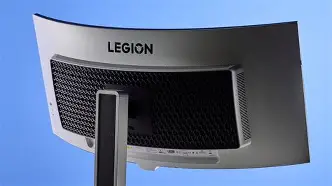
Lenovo’s Legion monitors generally prioritize a clean, gamer-friendly aesthetic with solid build quality. A fully adjustable stand (height, tilt, swivel) and a VESA mount option make it easy to integrate into different desk setups. Connectivity for the 34Wd 10 Oled typically includes DisplayPort for high-refresh PC gaming, HDMI for console compatibility, and a USB-C port for single-cable docking with laptops that support DisplayPort over USB-C plus power delivery. A small, integrated USB hub is handy for peripherals, and the presence of HDMI 2.1 improves console support for higher refresh rates at ultrawide or standard aspect ratios (depending on implementation).
Real-world use: who benefits most?
- Competitive and immersive gamers: will appreciate the fluid motion and deep blacks for contrast-rich titles and multiplayer gaming where visual clarity and input responsiveness matter.
- Content creators: video editors and colorists benefit from the wide color range and contrast, especially when grading HDR content or working with dark scenes.
- Productivity users: traders, developers, and multitaskers enjoy the extra horizontal space for side-by-side documents, spreadsheets, and long timelines.
- Laptop power users: the presence of a USB-C input with PD (if implemented) can turn the monitor into a docking hub for creators and professionals who use one-cable workflows.
Pros & Cons
Pros
- Exceptional contrast and deep blacks thanks to OLED, improving immersion for games and movies.
- High refresh rate and near-instant response times deliver fluid gaming performance and reduced motion blur.
- Ultrawide aspect ratio boosts productivity by providing more horizontal workspace.
- Color performance suitable for creative work, particularly HDR grading and media review.
- Modern connectivity (DisplayPort, HDMI, USB-C) supports versatile multi-device setups.
- Ergonomic stand and VESA compatibility make integration into varied desk setups straightforward.
Cons
- OLED burn-in risk — although manufacturers mitigate it with pixel-shifting, screen savers, and brightness management, static UI elements over long periods can pose a risk for some users.
- Peak HDR brightness may not match the numbers of top-tier mini-LED LCDs for sustained spec-sheet peak luminance.
- Premium price compared to LED-LCD ultrawides; the cost may be difficult to justify for users who prioritize high sustained brightness over contrast.
- Integrated speakers (if present) are generally basic; an external audio solution is recommended for serious audio work or immersive sound.
- Depending on firmware and driver maturity, small issues (menu behavior, firmware updates) can surface in early product life.
How it compares: quick table vs. close alternatives
The following table contrasts the Legion Pro 34Wd 10 Oled with two common alternatives buyers consider in this segment: a QD-OLED gaming ultrawide and a flagship IPS ultrawide. The comparison is high-level — exact specifications differ by model year and SKU.
| Model | Panel type | Resolution | Max refresh | Strength | Consideration |
|---|---|---|---|---|---|
| Lenovo Legion Pro 34Wd 10 Oled | OLED (self-emissive) | 3440 × 1440 | ~175 Hz | Best-in-class contrast and deep blacks; strong for mixed gaming & creative work | Higher price; potential burn-in concern; peak nit values depend on implementation |
| Alienware AW3423DW (example QD-OLED) | QD-OLED | 3440 × 1440 | ~175 Hz | Excellent color volume and high contrast; proven gaming performance | Premium pricing; availability can fluctuate |
| ASUS ROG Swift PG349Q (flagship IPS) | IPS | 3440 × 1440 | 120–160 Hz (model dependent) | Very bright; good color accuracy with stable long-term image retention | Contrast and blacks not as deep as OLED; potential haloing with local dimming |
Buying guide: questions to ask and features to prioritize
1. What will the monitor be used for most?
If the primary purpose is competitive gaming, prioritize refresh rate, low input lag, and adaptive sync support. For creative work, prioritize color accuracy, gamut coverage (sRGB, Adobe RGB, DCI-P3), and factory calibration. For general multimedia and mixed use, OLED’s contrast makes it an excellent all-rounder.
2. How concerned is the buyer about burn-in?
OLED panels carry a small risk of burn-in when static content is displayed for very long periods. Professionals who use fixed UI elements (toolbars, docking panels) for many hours daily should weigh that risk. Many modern OLED monitors include preventive features (pixel shift, automatic dimming of static elements, screensavers). Buyers should evaluate warranty terms and manufacturer guidance.
3. Connectivity and dockability
Confirm what ports the specific SKU includes. USB-C with DisplayPort Alt Mode and sufficient power delivery is invaluable for laptop users who want a single-cable workspace. Multiple HDMI ports and a high-bandwidth DisplayPort are essential for multi-source setups (PC + console).
4. Ergonomics and physical footprint
Measure desk space against the monitor’s stand footprint and confirm adjustability for comfortable viewing height and angle. For multi-monitor rigs or special stands, ensure VESA compatibility.
5. HDR expectations
Decide whether HDR “wow” moments are more important than raw peak nit numbers. OLED typically delivers a subjectively superior HDR experience through contrast and local highlight acuity, but LCD mini-LEDs can boast higher sustained peak brightness.
6. Software, firmware and support
Good on-screen display controls, reliable firmware updates, and clear warranty terms matter long term. Check that the manufacturer provides straightforward calibration tools or support for third-party colorimeters if color accuracy is critical.
Find top-rated Laptops & Computers products at great prices.
Shop Amazon →7. Price versus alternatives
Set a realistic budget and compare the Legion Pro 34Wd 10 Oled to both OLED and high-end LCD competitors. If contrast and cinematic image quality top the list, paying the OLED premium can be worthwhile. If the budget is tighter, a high-refresh IPS or mini-LED ultrawide may deliver better peak brightness for cost.
Real-world scenarios and recommended buyer profiles
The following practical scenarios help match buyer priorities with whether the Legion Pro 34Wd 10 Oled is a good fit.
- Gamer who streams and edits video: The monitor provides excellent contrast for streaming content review and fast refresh for gaming. The ultrawide format helps manage chat, streaming tools, and editing timelines simultaneously.
- Professional video editor: If HDR grading and accurate shadow detail are priorities, OLED’s deep blacks aid judgment. However, color-managed workflows will benefit from external calibration and a check of the monitor’s color gamut coverage.
- Office power user / developer: Ultrawide real estate improves productivity, but those who display static UI elements for long hours should evaluate burn-in mitigation strategies or consider a high-end IPS alternative.
- Console gamer: If a console supports ultrawide resolutions or the buyer uses a console and PC, confirm HDMI bandwidth and how the monitor handles console inputs at high frame rates.
Value assessment: is it worth the price tag?
Whether the Legion Pro 34Wd 10 Oled is worth the price depends on priorities. Buyers who value absolute contrast, immersive HDR viewing, and the combination of high refresh with ultrawide workspace will find clear value. Creators who work with dark scenes and need nuanced shadow detail will appreciate the panel’s strengths.
That premium does come with considerations: a potentially higher purchase price, the need to accept OLED maintenance best practices (brighter screens, avoiding permanently static content), and verifying long-term support from Lenovo. Compared with LED-LCD alternatives the buy decision ultimately hinges on whether the buyer places greater weight on OLED’s superior contrast and perceived image quality than on the highest possible sustained HDR nit numbers or the absolute lowest long-term risk of image retention.
Practical tips for buyers
- Check the exact SKU and confirm port configuration — USB-C power delivery and HDMI 2.1 support are key for single-cable laptop use and console compatibility.
- Look for factory calibration reports or color presets if color-critical work is planned.
- Use pixel-shifting and screen-saver features, and rotate static UI elements occasionally to reduce burn-in risk.
- Consider warranty coverage and read the manufacturer’s guidance on OLED longevity.
- If possible, test the unit in person to assess perceived brightness, color, and any uniformity issues before buying.
Conclusion
The Lenovo Legion Pro 34Wd 10 Oled represents the modern premium ultrawide approach: blending OLED contrast with high refresh rates and work-focused horizontal space. For gamers who prize immersion and responsiveness, and for creators who need deep blacks and strong subjective HDR, the monitor is a compelling choice. For buyers most concerned about sustained peak HDR nit performance or absolute zero chance of image retention, a high-end mini-LED or IPS alternative may be better aligned with those priorities.
Ultimately, the Legion Pro 34Wd 10 Oled is worth its price for users who intentionally value OLED’s unique strengths and are comfortable following recommended usage practices. The decision should be guided by the buyer’s primary workflows, tolerance for OLED maintenance considerations, and the connectivity features required for their setup.