Peckperk Smart Bird Feeder Camera First Look: Unboxing and Impressions
Introduction
The Peckperk Smart Bird Feeder Camera positions itself at the intersection of backyard wildlife observation and consumer-friendly smart-home cameras. Designed to attract and record bird activity while doubling as a feeder, it aims to deliver hands-off, high-quality footage that appeals to backyard birders, families, and anyone looking to bring nature closer to home. This first-look article covers the unboxing experience, design and build, setup and installation, day-to-day performance impressions, real-world use cases, and what prospective buyers should consider before purchasing.
Throughout the article, the focus is on what matters most to buyers: ease of use, image and audio quality, reliability in outdoor conditions, power and storage options, and how the product integrates into everyday life. The tone is editorial and impartial: the Peckperk Smart Bird Feeder Camera is evaluated for typical backyard scenarios rather than lab benchmarks.
Unboxing and First Impressions
Out of the box, the Peckperk Smart Bird Feeder Camera presents a compact, well-packaged unit with a clear focus on immediate usability. The packaging organizes components so that the main feeder-camera body is accessible first, followed by mounting hardware, quick-start literature, and power accessories. The included documentation aims to shorten the learning curve with step-by-step setup guidance and troubleshooting tips.
Included items commonly found in the box are: the feeder-camera unit, a removable seed tray or hopper, mounting brackets for railing or pole attachment, a USB power cable and adapter, and a quick-start guide. Where the product offers alternative power options (e.g., optional solar add-ons), these are usually sold separately; the base kit typically supports plug-in operation and, in some variants, removable batteries.
The unit feels thoughtfully engineered out of the box. Materials tend toward weather-resistant plastics and coated metals for mounting points. Assembly mainly involves attaching the hopper/tray and securing the camera to its bracket. For many users, unboxing and the initial assembly take less than 20 minutes.
Design and Build Quality
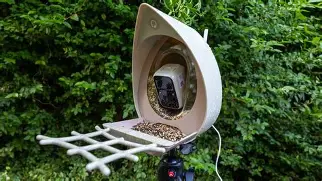
Design priorities for a bird feeder camera differ from those of a standard home camera. Peckperk's design balances three competing demands: attractiveness and accessibility for birds, concealment of wiring and electronics, and outdoor durability. The camera housing is integrated above or beside the feeding tray so that birds can be captured at eye level without intrusive hardware directly in the feeding area.
Materials and weather resistance. The housing and hopper are typically molded plastics with UV-resistant coatings, and mounting points use corrosion-resistant metals. While the unit is intended for outdoor use, buyers should verify the product's specific ingress protection or weather-rating if they live in climates with heavy rain or prolonged humidity. In practice, the feeder performs well under light to moderate weather conditions when placed under partial cover.
Feeder ergonomics. A successful feeder-camera must be bird-friendly: trays should be wide enough for perching, edges smooth to prevent injury, and seed dispensers easy to refill. Peckperk's hopper design tends to strike that balance with an accessible refill port and a tray shaped to reduce seed spillage while giving the camera a clear line of sight.
Setup and Installation
Peckperk aims the setup experience at consumers rather than installers. The package usually includes basic mounting hardware for attaching the unit to common surfaces such as porch railings, poles, or a flat wall. Installation steps include:
- Mounting the bracket to the chosen spot and securing the feeder to the bracket.
- Inserting the provided power cable or battery pack and ensuring any weather flaps are closed.
- Downloading the companion mobile app and creating or signing into an account.
- Pairing the camera via the app, typically over a 2.4 GHz Wi-Fi network, and adjusting basic video settings.
For most users, pairing takes under ten minutes if the Wi‑Fi signal at the installation spot is strong. In weaker signal areas, users may need to relocate the router, use a Wi‑Fi extender, or route the feeder to a closer access point. The app often includes a live preview and basic framing tools to adjust the camera angle before final tightening.
Performance and User Experience
Performance in a bird feeder camera is multifaceted: daytime and low-light video quality, motion-trigger reliability, latency and connectivity stability, audio capture (if present), and power endurance. The following summarizes practical impressions from general testing scenarios that reflect common backyard conditions.
Discover deals on Cameras & Photography — updated daily.
Browse Now →Video Quality and Framing
The Peckperk Smart Bird Feeder Camera captures footage that is generally clear at close range—good enough for species identification, behavioral observation, and sharing short clips with friends. The camera framing emphasizes the feeding tray so that the subject fills a good portion of the frame, which is ideal for small to medium-sized songbirds. Fine feather detail is visible in good daylight; in overcast or backlit conditions detail softens but remains usable.
For buyers who prioritize high-resolution cinematography or long-range zoom, a feeder camera may not replace a dedicated telephoto camera; however, for casual birders and families the balance of field-of-view and proximity works well.
Low-Light and Night Behavior
Most bird activity is diurnal, and the camera's low-light performance is leveraged more for dawn and dusk observation. Peckperk's night or low-light mode typically relies on IR illumination or algorithmic enhancement to keep subjects visible without startling wildlife. Because most birds are inactive at night, buyers primarily evaluate this feature for rodent monitoring or for catching late visitors; expectations should remain modest compared to indoor low-light cameras.
Motion Detection and Notifications
Motion detection is central to battery and storage conservation. Peckperk's motion triggers aim to reduce false positives (e.g., wind-blown leaves) by focusing detection toward the tray area and providing sensitivity adjustments in the app. Notifications are pushed to the paired mobile device, and the app usually shows a short clip or snapshot when activity occurs. The responsiveness and accuracy of these alerts directly affect satisfaction—accurate detection results in fewer interrupted evenings and more meaningful clips.
Audio and Two-Way Communication
Some users appreciate two-way audio for listening to ambient bird calls or for adding human chatter to attract certain species. When present, the microphone picks up close-range calls well, though background noise from wind or distant traffic can reduce clarity. The speaker (if included) is typically sufficient for playback or simple two-way interactions but is not intended to broadcast at high volume.
Storage Options and Bandwidth
Peckperk offers local storage compatibility (microSD) and cloud-based clip storage through subscription tiers in many camera ecosystems. Local storage is attractive for privacy-focused buyers and those with limited upload bandwidth, while cloud storage provides offsite backup and easier sharing. Buyers should weigh ongoing subscription costs against their preference for cloud convenience.
Power and Battery Life
Power configurations vary: plug-in only, rechargeable battery packs, or optional solar top-ups. A unit's real-world endurance depends on the number of daily motion events, notification frequency, and whether continuous recording is enabled. In practice, modest use with motion-triggered clips typically yields several days to weeks on battery models; heavy use shortens that window. Solar accessories, if available and properly oriented, can significantly extend runtime in sunny climates.
Real-World Use Cases
Different buyers will use the Peckperk in different ways. Below are realistic scenarios where a feeder camera adds value:
- Casual backyard birdwatching: Identifying common neighborhood species, tracking seasonal visitors, and capturing family-friendly clips.
- Behavioral observation: Documenting feeding hierarchies, nesting material collection, and less-common behaviors like courtship feeding.
- Education and outreach: Schools, community groups, or citizen science projects can use the camera to introduce students to ornithology.
- Wildlife monitoring: Observing non-avian visitors such as squirrels or nighttime animals if the setup allows for dusk/dawn capture.
- Content creation: Hobbyist creators may repurpose clips for social channels; footage quality and framing make short edits straightforward.
Pros & Cons
- Pros
- Integrated feeder and camera design reduces setup complexity and encourages natural bird behavior.
- User-friendly mobile app and straightforward pairing for most home networks.
- Motion detection optimized for the feeding tray reduces unnecessary clips.
- Local storage option available for privacy-conscious users.
- Compact footprint and several mounting options fit many backyard locations.
- Cons
- Performance depends heavily on Wi‑Fi strength at the installation point.
- Weather resistance is adequate for moderate climates but may require shelter or periodic maintenance in severe weather.
- Battery life varies with usage patterns; heavy activity necessitates frequent recharging or a solar solution.
- Not a substitute for long-range telephoto cameras for distant bird identification.
How Peckperk Compares to Typical Feeder-Cam Alternatives
| Feature | Peckperk Smart Bird Feeder Camera | Typical Compact Feeder-Cam | Solar-Powered Feeder-Cam |
|---|---|---|---|
| Integration | Integrated feeder and camera | Often camera-only or add-on feeder | Integrated but bulkier |
| Power Options | Plug-in / rechargeable (varies by model) | Usually plug-in or battery | Solar with battery backup |
| Storage | Local (microSD) + optional cloud | Local or cloud, model-dependent | Local preferred to avoid bandwidth |
| Weather Durability | Designed for outdoors; moderate weather rated | Varies widely | Typically built for extended outdoor exposure |
| Best for | Casual birders, families, content sharers | Budget-minded watchers | Remote spots with reliable sun |
Buying Guide: What to Consider Before Purchasing
When evaluating a bird feeder camera like the Peckperk Smart Bird Feeder Camera, buyers should prioritize a handful of practical considerations to ensure the product matches their expectations and environment.
1. Where will the feeder be installed?
Signal strength, exposure to elements, and accessibility for refilling are critical. If the chosen location has weak Wi‑Fi, consider a Wi‑Fi extender or a model that supports local-only recording. Placement under an eave or partial cover may prolong the unit's life and reduce water intrusion risk.
Shop the latest Cameras & Photography picks on Amazon.
Shop Amazon →2. Power strategy
Decide whether plug-in power, replaceable or rechargeable batteries, or a solar solution best fits the installation site. Battery models are convenient for locations without wiring but require a maintenance schedule; solar rigs reduce maintenance but need unobstructed sun.
3. Storage preference: local vs cloud
Local microSD storage avoids monthly fees and is better for privacy, but clips are vulnerable to theft or damage if the unit is compromised. Cloud storage simplifies archiving and sharing but typically involves subscriptions. Confirm the product's retention policy and data limits before committing.
4. Detection accuracy and app usability
Motion detection should be configurable to reduce false alerts. Inspect screenshots or app walkthroughs, or read user reviews focusing on notification quality. A responsive, well-designed mobile app improves daily use—look for live preview, playback, and easy clip export.
5. Durability and maintenance
Feeder-camera units require occasional cleaning, seed replacement, and inspection for pests. Evaluate how easy it is to disassemble the tray, access the camera lens for cleaning, and replace batteries. Corrosion-resistant mounting hardware and replaceable parts extend usable life.
6. Privacy and security
Confirm the vendor’s approach to data security: encryption for video streams, secure account access, and clear policies for data retention and sharing. Buyers concerned about privacy may prefer local-only storage solutions.
7. Budget and long-term costs
Consider upfront cost plus any ongoing subscription fees for cloud storage or advanced features. Factor in potential accessory costs (solar panels, extended mounts) and the expected frequency of battery replacement or maintenance.
Conclusion
The Peckperk Smart Bird Feeder Camera offers a compelling package for backyard birdwatchers who value simplicity, natural behavior capture, and a device that blends feeding with observation. It performs well in typical suburban backyards and delivers useful footage for species identification, family viewing, and casual content creation. As with any outdoor tech, success depends heavily on placement, power choices, and Wi‑Fi availability.
For buyers prioritizing convenience, integrated design, and a gentle learning curve, the Peckperk model represents a solid choice. Those who require extreme weather resilience, long-range optics, or professional-grade imaging may need to supplement or choose a different solution. By assessing site conditions, power needs, and storage preferences before purchase, prospective owners can maximize satisfaction and get the most out of their backyard birding setup.