The Real Truth: Alienware 16 Area 51 Gaming Laptop or Linksys Re7350?
Category: Laptops
Introduction
When evaluating upgrades or purchases for a better gaming and home networking experience, buyers sometimes face an odd dilemma: invest in a high-end gaming laptop like the Alienware 16 Area 51 or patch network issues with a device such as the Linksys RE7350 range extender. At first glance these choices aren’t comparable — one is a portable, performance-driven computer; the other is a networking accessory. Yet both can influence how games run, how multimedia streams, and how users experience online life. This article examines both products in depth, outlines real-world use cases, lists pros and cons, and presents a practical buying guide to help readers decide which investment makes sense given specific needs and constraints.
Product Analysis — Alienware 16 Area 51 Gaming Laptop
The Alienware 16 Area 51 is positioned as a desktop-replacement gaming laptop built around high-performance components. Buyers typically look to machines like this for bleeding-edge graphics performance, high-refresh displays, and the flexibility to game or work from different locations without sacrificing frame rates.
Performance and Hardware
Machines in this class prioritize raw performance: powerful CPUs, discrete GPUs with ample VRAM, and fast NVMe SSD storage. For gamers and content creators who demand higher frame rates and faster load times, the Alienware 16 can deliver a substantially better out-of-the-box experience than mainstream laptops. The large chassis allows room for improved cooling solutions (multiple heat pipes, vapor chambers, and larger fans), which helps sustain higher clocks under load.
Display and Input
Expect a 16-inch panel tuned for gaming: high refresh rates (120Hz, 165Hz, or more), good color coverage for content work, and minimal motion blur. Keyboard and trackpad ergonomics on gaming laptops are generally optimized for extended play sessions, often including per-key RGB and low-latency inputs.
Portability and Battery
Despite being called a laptop, an Area 51-class machine is heavy and power-hungry. Battery runtimes under gaming workloads are limited; most users will game plugged in. Portability is more about transporting a powerful desktop replacement rather than working unplugged all day.
Real-World Use Cases
- Competitive gamers who attend LAN events and want desktop-level performance on the road.
- Content creators who need GPU-accelerated editing and rendering while traveling.
- Users who want an all-in-one system for gaming, streaming, and productivity without managing a separate desktop.
- Households that value a single, powerful machine that family members can use for both play and work.
Pros & Cons — Alienware 16 Area 51
- Pros:
- High-end performance that can match many desktops for gaming and creative workloads.
- Large, high-refresh displays that improve perceived smoothness in fast games.
- Advanced cooling and chassis design that sustain performance under long sessions.
- Rich port selection for peripherals, external displays, and networking.
- Cons:
- High purchase price compared to mid-range laptops or network upgrades.
- Heavy and less convenient for daily commuters who need light ultraportables.
- Battery life is limited under load; gaming typically requires AC power.
- Repairability and upgradeability are better than ultraportables but still limited compared to desktops.
Product Analysis — Linksys RE7350
The Linksys RE7350 is a compact Wi‑Fi range extender intended to improve wireless coverage in homes where the primary router cannot reach certain rooms reliably. Unlike a mesh system, an extender takes an existing Wi‑Fi network and repeats it, extending signal range at the cost of some throughput. Buyers often consider range extenders when dead zones or intermittent connections are noticed in specific areas such as basements, bedrooms, or distant living rooms.
Discover deals on Laptops & Computers — updated daily.
View Offers →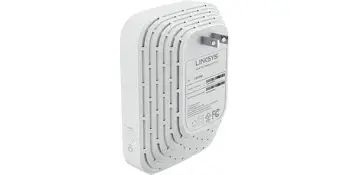
Function and Setup
Range extenders like the RE7350 are designed for simple setup — plug it into an outlet, pair it with the main router via WPS or an app/web interface, and place it midway between the router and the dead zone. They typically offer dual-band operation (separate 2.4GHz and 5GHz radios) and basic security and management features. The key attraction is low cost and quick deployment compared to a whole-home mesh overhaul.
Performance Considerations
Extenders help coverage but can reduce effective bandwidth, especially if they use a single radio to both connect to the router and serve clients (half-duplex repeating). For many practical tasks — web browsing, 1080p streaming, and light online gaming — a well-placed extender offers noticeable improvement. For heavy 4K streaming, competitive low-latency gaming, or large file transfers, a wired backhaul or mesh system will outperform a simple extender.
Real-World Use Cases
- Apartment or house areas where Wi‑Fi drops or speeds are low but hardwiring is impractical.
- Secondary devices (smart TVs, streaming boxes, IoT devices) that need reliable connectivity away from the router.
- Users who need an inexpensive, fast-to-deploy fix for specific dead zones without replacing existing equipment.
Pros & Cons — Linksys RE7350
- Pros:
- Affordable solution to extend Wi‑Fi coverage in targeted areas.
- Plug-and-play form factor with a brief setup process.
- Compact and unobtrusive compared to full-size routers.
- Improves wireless reliability for streaming and casual gaming in previously dead zones.
- Cons:
- May reduce peak throughput compared to a direct router connection or a mesh system with wired backhaul.
- Single-extender setups can complicate SSID management and roaming behavior.
- Not a long-term performance upgrade for heavy competitive gaming where latency and packet loss matter.
Side-by-Side Comparison
| Category | Alienware 16 Area 51 | Linksys RE7350 |
|---|---|---|
| Primary Purpose | High-performance portable gaming and creative work | Extend existing Wi‑Fi coverage to eliminate dead zones |
| Typical Cost Range | Premium — several times higher than mainstream laptops | Low-to-mid — affordable household networking accessory |
| Impact on Gaming Experience | Directly improves frame rates, visuals, and local performance | Indirectly improves online play if poor Wi‑Fi was the bottleneck |
| Portability | Portable but heavy; designed for mobility with limits | Stationary; plugs into wall outlets |
| Upgradeability | Some internal upgrades possible (RAM, storage); GPU often fixed | Limited to firmware updates and positional changes |
| Best For | Users who need raw performance away from a desktop | Users who need to fix Wi‑Fi dead zones affordably |
| Longevity | Several years if components remain competitive; performance degrades vs. new GPUs | Useful until home network needs outgrow extender approach or router is upgraded |
Which Should a Buyer Choose? A Practical Buying Guide
Deciding between a high-end gaming laptop and a Wi‑Fi extender is less about direct feature comparisons and more about priorities and the root cause of the current experience gaps. The following checklist helps identify which purchase will produce the most meaningful improvement.
1. Identify the Primary Problem
- If the issue is low frame rates, slow load times, or the need for GPU compute — prioritize a performance upgrade like the Alienware 16.
- If the issue is frequent disconnects, dead zones, slow wireless speeds in specific rooms, or poor stream quality in a particular location — a network solution like the RE7350 is appropriate.
2. Test Before Buying
Run simple diagnostics before spending a large sum. Use a wired connection to check ISP speeds and compare to wireless results. Test ping and packet loss with the device that’s experiencing problems. If wired performance is fine but Wi‑Fi degrades in specific areas, a range extender or mesh system will likely help more than a new laptop.
3. Consider Budget and Value
High-end gaming laptops are significant investments; they combine CPU, GPU, display, storage, and cooling in one purchase. A network extender is inexpensive in comparison but addresses a narrower set of problems. Buyers on tight budgets who primarily need better online reliability should first fix the network; those needing outright performance or mobility should invest in the laptop.
4. Think Long-Term and Future-Proofing
- For laptops: prioritize CPU and GPU headroom, fast NVMe storage, and upgradeable RAM. A higher initial spend often extends useful life for gaming and content creation.
- For networking: consider whether a single extender will suffice or if a mesh Wi‑Fi system or router upgrade is a better long-term solution. For homes with many devices or multi-floor layouts, mesh systems scale better.
5. Evaluate the Gaming Experience Holistically
Gaming experience depends on both local performance and network quality. A powerful laptop cannot fix poor latency or packet loss caused by a flaky Wi‑Fi link. Conversely, an excellent network cannot increase the frame rate beyond what the laptop’s GPU/CPU allow. For online competitive play, prioritize low-latency wiring or make sure the wireless path is robust before spending on raw compute power.
6. Practical Deployment Tips
- If choosing a laptop, ensure the home network supports its capabilities (e.g., a modern router with sufficient bandwidth and low latency).
- If choosing a range extender, place it roughly halfway between router and the dead zone and verify improvement with real tests. Consider Ethernet backhaul if throughput is important and feasible.
- When in doubt, temporary trials can help: most extenders are inexpensive enough to try; testing a laptop via local demo units or verifying return policies reduces buyer’s remorse.
Real-World Scenarios — Decision Examples
Scenario A: Apartment Gamer with Occasional Lag in Living Room
If a player notices stuttering and high ping only in the living room but wired performance near the router is solid, a range extender or relocation of the router will deliver a rapid, low-cost fix. The Linksys RE7350 or a better-positioned access point will eliminate weak signal zones and improve online sessions without replacing the gaming rig.
Find top-rated Laptops & Computers products at great prices.
Browse Now →Scenario B: Streamer and Editor Who Travels Frequently
For a content creator who needs GPU-accelerated editing on the road and sometimes streams from different locations, a powerful mobile workstation like the Alienware 16 offers combined benefits: local rendering performance and the ability to stream from events or remote locations. In this case, upgrading the laptop is the clear priority.
Scenario C: Household with Many Smart Devices and Heavy 4K Streaming
A single extender may help certain rooms but could struggle with many simultaneous high-bandwidth streams. Investing in a more robust router or a mesh Wi‑Fi system provides better scalability and future-proofing than a single extender. The extender is a stopgap, not a comprehensive solution.
Maintenance, Support, and Other Considerations
Both product types require occasional attention. Laptops benefit from firmware and driver updates (GPU drivers, BIOS), regular cleaning of vents, and cautious battery charging practices. Range extenders require firmware updates, careful placement, and occasional reboots. Warranty and support differ: laptop repairs can be costly and may involve shipping or service center visits, while extenders are simpler and often replaced under warranty with minimal disruption.
Conclusion
The right choice between an Alienware 16 Area 51 gaming laptop and a Linksys RE7350 range extender depends entirely on what is limiting the user’s experience today. If local, compute-bound performance — higher frame rates, better visuals, or GPU-accelerated workflows — is the issue, a high-end gaming laptop is a justified investment. If the problem is unstable or weak Wi‑Fi in particular areas of a home, an extender is an efficient and economical remedy.
Ultimately, both devices address different layers of the user experience. Savvy buyers should diagnose the bottleneck first, weigh budget and long-term needs, and choose the option that resolves the root cause. In many households, the best result comes from a thoughtful combination: a capable gaming laptop supported by a reliable, well-designed home network. Deciding which to buy first is simply a matter of which problem is most immediate and which investment delivers the most visible improvement for the money.